
Occupational Therapist vs. Physical Therapist: Which Is Right for You?
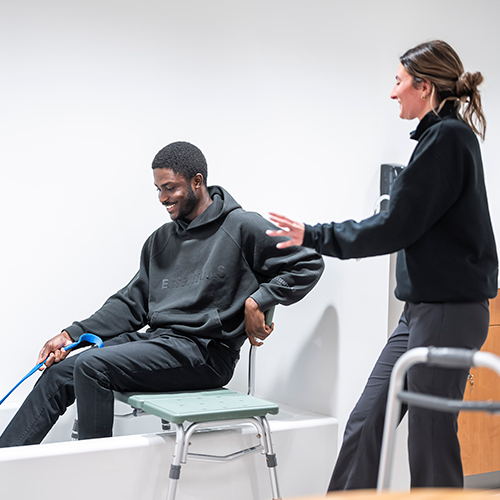
Both occupational therapists (OTs) and physical therapists (PTs) are deeply invested in helping people live more fulfilling lives. However, the modalities, training, and goals of an OT vs. PT can look quite different. Before choosing a career path, be sure to learn and understand the key differences.
What Do Occupational Therapists Do?
An occupational therapist (OT) is a healthcare professional who helps people fully participate in the daily activities that matter most to them—at home, at school, at work, and in the community. Rather than focusing only on physical skills, OTs look at the whole person: their routines, environment, and goals. People may work with an OT after an illness or injury, or if they have a condition that affects their physical, cognitive, or emotional abilities. OTs support people of all ages to build skills, adapt tasks or environments, and regain confidence and independence in their everyday lives.
To support their clients, occupational therapists may:
- Assess abilities and needs – Understand each person’s strengths, challenges, and goals.
- Create individualized plans – Design strategies and activities to improve participation in meaningful daily life.
- Guide skill-building – Teach and practice techniques to improve movement, coordination, thinking, or self-care skills.
- Support emotional well-being – Address the social and emotional impacts of illness, injury, or disability.
- Collaborate with others – Work closely with families, caregivers, teachers, and healthcare teams to ensure consistent support.
It is common to confuse occupational therapists and physical therapists (PT). The difference between occupational therapy and physical therapy primarily revolves around an occupational therapist’s focus on a patient’s ability to live more independently and participate fully in their lives, while physical therapists generally focus on improving specific range of motion and strength issues caused by injuries or illnesses.
What Do Physical Therapists Do?
To compare physical therapy vs. occupational therapy, it is essential to consider what physical therapists do for patients. Also called physiotherapists, these professionals most commonly work with patients recovering from injuries or surgeries. Using techniques such as stretching and exercise, as well as hands-on physical treatments, PTs help their patients improve their range of motion and reduce pain related to movement. Like OTs, PTs perform assessments and work closely with patients and care teams to develop treatment plans to meet their patients’ goals.
Education & Licensing Requirements for OTs and PTs
Both occupational and physical therapists are healthcare provider positions that require an advanced degree, although specific education and licensing requirements differ for OT vs. PT therapy jobs. To practice independently as an occupational therapist (rather than as an assistant), you’ll need to complete a bachelor’s degree followed by a master’s degree. How long is occupational therapy school? Typically, combined education takes about six years, though fast-track programs may reduce this timeline.
Licensure requirements vary from state to state. In New York, OTs are licensed through the New York State Education Department (NYSED) Office of the Professions. To qualify, occupational therapists must earn a master’s degree in occupational therapy, pass the National Board for Certification in Occupational Therapy (NBCOT) OTR exam, and complete a minimum of six months of supervised occupational therapy training.
Physical therapists, on the other hand, must complete a Doctor of Physical Therapy (DPT) degree before they qualify for independent practice. A DPT program typically takes three years to complete beyond the time required for a standard bachelor’s degree, which means PTs may spend around seven years in school.
Like OTs, new physical therapists must also complete the requisite testing. In New York, PTs must take and pass the National Physical Therapy Examination or an exam otherwise approved by the NYSED.
Role & Job Environment Differences
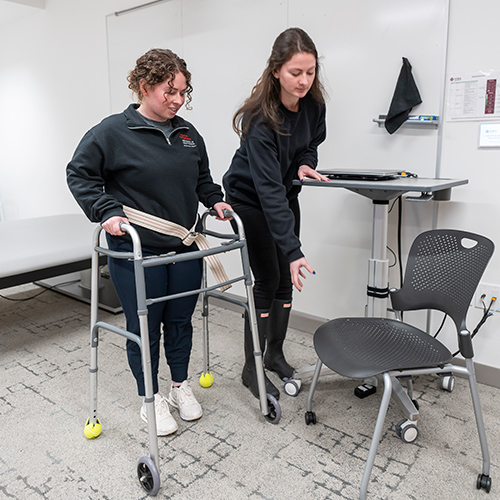
Both OTs and PTs are dedicated to the wellbeing of their patients, but their scope of practice and the modalities they use to assist them are significantly different. Occupational therapists specifically help their patients recover and improve their ability to live independently and participate in activities that are important to them. According to the U.S. Bureau of Labor Statistics (BLS), 29% of OTs work in a hospital setting, while 28% work in private clinics, and another 13% work in educational environments like schools.
Physical therapists also help their patients recover from injuries and illnesses in addition to assisting with chronic conditions. However, the goal of physical therapy is to recover range of motion and strength rather than life skills. PTs work in settings similar to those of OTs for the most part, with 35% working in private clinics, 28% working in hospitals, and another 10% working as home healthcare workers.
Salary Comparison: OT vs. PT
Both occupational therapy and physical therapy offer similar earning potential, with variations based on factors like work setting, job duties, and location. The median annual salary for both professions in 2024 fell between $98,340 and $101,020.
Are You Better Suited for OT or PT?
Choosing between the OT and PT career paths can be difficult since both professions involve hands-on patient care that helps patients reduce pain and gain strength. If you are struggling with this decision, it may be helpful to consider the following:
- Education: PTs require a doctoral degree to work independently, which means at least one additional year of school as compared to the OT profession. Are you prepared to commit the time and resources to a doctoral degree, or does a master’s program better suit your career goals?
- Problem Solving: Both PTs and OTs solve problems alongside their patients, but OTs are more focused on the big picture of helping their patients move through their lives more independently. On the other hand, PTs tend to focus on more acute problems like pain, range of motion, and recovery from surgery or injury. Do you prefer to work on specific issues or look at things more broadly, considering social and emotional factors as well as physical ones?
- Relationship Building: Both PTs and OTs develop strong relationships with their patients, but OTs tend to spend more time understanding their patients’ needs and daily lives, allowing them to build meaningful and long-lasting connections. Are you more comfortable working closely with patients, or would you rather spend more time cultivating professional relationships with other healthcare providers?
- Work Environment: While OTs and PTs can work in many similar environments, some places are much more likely to utilize one over the other. For instance, if you want to work at a school focusing on the care of children with developmental delays or physical limitations, the OT path will be the right choice.
Why Choose Iona for OT Education

Earning a master's degree in occupational therapy at Iona University can be an excellent step toward a rewarding career. Students in the OT program at Iona are enrolled in the New York Presbyterian-Iona School of Health Sciences and will have the opportunity to do hands on clinical work and rotations at New York-Presbyterian, which is ranked as one of the top hospitals in the U.S. Iona prioritizes community engagement and collaboration in addition to offering an unmatched location, just an hour North of New York City.
If you’re ready to apply today or just want to learn more about our occupational therapy department, be sure to reach out to our admissions office.
FAQs
Occupational therapists and physical therapists both work closely with patients to improve their health and lives. OTs work with their patients to set goals for living more independently and develop plans to meet those goals that address physical limitations as well as social and emotional hurdles. Physical therapists work with their patients to address both acute and chronic pain, typically developing treatment plans that focus on building strength and flexibility.
Both occupational therapy and physical therapy offer similar earning potential, with variations based on factors like work setting, job duties, and location.
Becoming an occupational therapist does not require a doctoral degree. OTs must have a master’s degree to practice independently. To independently practice as a physical therapist, a doctoral degree is required.
To obtain licensure as either an occupational therapist or a physical therapist, an individual must complete the required entry-level degree for that profession. Transitioning from OT to PT, or vice versa, would require returning to school to complete the appropriate degree, such as a Doctor of Physical Therapy or an Occupational Therapy degree. In addition to academic coursework, both professions require supervised clinical fieldwork and successful completion of a national licensing examination.
Both occupational therapists and physical therapists work in hospitals, private clinics, and skilled nursing facilities. Many occupational therapists also work in school settings, but that is less common for physical therapists.
After earning an undergraduate degree, becoming an occupational therapist requires completion of a graduate OT program, typically two to three years, including academic coursework and supervised fieldwork, followed by a national licensing exam. Physical therapists complete a three-year doctoral program of post-undergraduate education; upon successful completion, you are eligible for licensure. Both professions require rigorous graduate education and clinical training to practice independently.