
Is an Accelerated Nursing Program Right for Me?
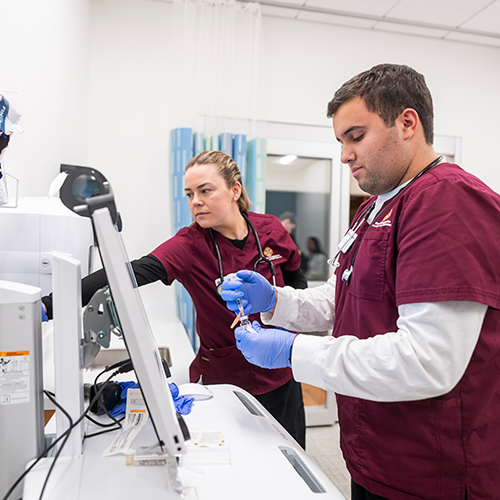
Interested in becoming a nurse but not sure which type of nursing program is right for you? An Accelerated Bachelor of Science in Nursing (ABSN) can be an ideal degree path for motivated students ready to fast-track their nursing education and clinical training and jump-start their health care career after completing their degree.
Guidance From Admissions Experts
Ryan DePuy, the vice president of undergraduate admissions at Iona University, and Sherylyn Watson, Ph.D., RN, the director of nursing and associate dean of the NewYork-Presbyterian Iona School of Nursing & Health Sciences, offer an inside look at what nursing admissions committees seek in strong candidates and how intentional preparation takes your application to the next level.
To help you determine if this is the right degree for you, our ABSN guide covers:
- The difference between a traditional bachelor’s in nursing and an accelerated bachelor’s in nursing
- How to be a competitive nursing applicant
- How to select the ABSN degree for you
- Pre-application checklist
- Is an ABSN worth it?
Traditional BS in Nursing vs. Accelerated BS in Nursing
A bachelor’s degree in nursing is increasingly the standard credential for entering the nursing field. Magnet-status hospitals actively seek baccalaureate-prepared nurses for their advanced clinical skills and expertise, and many states—including New York—require nurses with an associate degree to earn a BSN within 10 years of initial licensure.
While the destination is the same, there are two distinct paths to get there. Both traditional and Accelerated Bachelor of Science in Nursing tracks prepare you for the National Council Licensure Examination (NCLEX) and professional nursing practice. However, they are designed for very different types of students. Each route reflects different academic backgrounds, life circumstances and timelines for completion.
Traditional Bachelor of Science in Nursing
A traditional Bachelor of Science in Nursing program offers first-time college students a four-year track through their nursing education. BS in Nursing programs often feature:
- A combination of general education and nursing course work.
- Clinical experiences that are introduced in the second year of the nursing program.
The BS in Nursing at Iona offers undergraduate students a pathway to gaining strong clinical knowledge and real-world experience.
Accelerated Bachelor of Science in Nursing
An Accelerated Bachelor of Science in Nursing degree is designed for those who have earned a bachelor’s degree in a non-nursing field and are prepared for an intensive nursing education. While details vary from school to school, ABSN degree programs often include:
- A fast-paced timeline that allows students to graduate in approximately 16 months.
- Intensive, nursing-focused curriculum without general education courses.
- Real-world clinical placements that help turn theory into practical application.
Designed as a full-time, Monday through Friday commitment, Iona’s 16-month Accelerated BS in Nursing utilizes a cohort-based model to fast-track students into the profession. Because classes and clinicals are scheduled during the day, the program is an intensive immersion that requires students’ full attention. For that reason, it’s recommended that students do not work during their program.
Are You a Good Fit for ABSN? What Competitive Candidates Have in Common
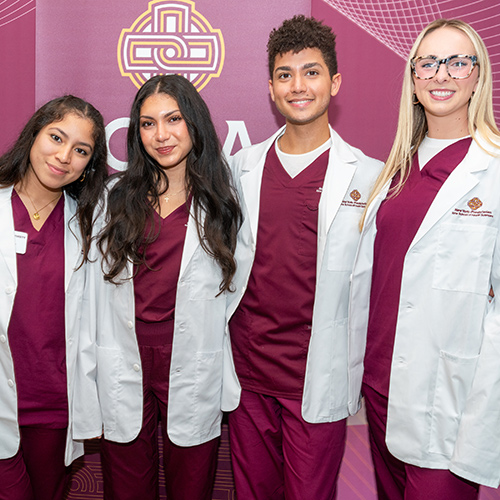
While applicants come from a wide range of backgrounds, competitive ABSN candidates tend to share a common set of academic and personal qualities that position them for success in a fast-paced program.
Commitment to Success
While admissions criteria vary by institution, most ABSN programs share a common goal: ensuring admitted students are academically prepared to keep pace with an intensive curriculum and motivated to complete a demanding program.
When reviewing applications for accelerated nursing programs, admissions committees look at the full academic picture—not just individual grades. Transcripts are reviewed to understand overall performance, consistency and readiness for advanced course work.
As Watson explains, the central question is: “Are they academically strong enough to handle the program’s rigor?” This is especially important in science-based courses, which make up the core of ABSN prerequisites and reflect how well a student may perform in an accelerated format.
Academic Preparation and Prerequisites
When planning your next steps toward an accelerated nursing degree, remember that your undergraduate major does not determine your success in an ABSN program. However, some disciplines align more closely with the academic demands of nursing education, such as:
- Biology
- Chemistry
- Health and Human Services
- Health or Exercise Sciences
- Kinesiology
- Psychology
Because these majors often include course work that overlaps with ABSN prerequisites, you may be able to complete admissions requirements more efficiently. If your prerequisites were completed in your prior undergraduate education, you can move directly into the nursing curriculum at the next available start date.
If you have a non-science degree, you can still apply and excel in an ABSN program and pursue your dream of becoming a nurse. DePuy explains that Iona has welcomed students from marketing, philosophy and many other disciplines. And because you and your fellow students must complete the same prerequisite course work before enrolling, you can increase your academic readiness through intentional preparation, regardless of your undergraduate major.
ABSN Requirements at Iona
To be considered for admission to Iona’s Accelerated BSN program, applicants must meet the following requirements:
- Hold a completed baccalaureate degree.
- Maintain a cumulative minimum GPA of 3.0.
- Complete the following prerequisite courses with a grade of B- or better within five years of application:
Chemistry*- Microbiology*
- Human Anatomy and Physiology I & II*
- Developmental Psychology
- College-level algebra or higher
- College-level statistics
- Ethics (preferably bioethics or medical ethics)
*All science courses must include an in-person laboratory component.
Soft Skills for Nursing
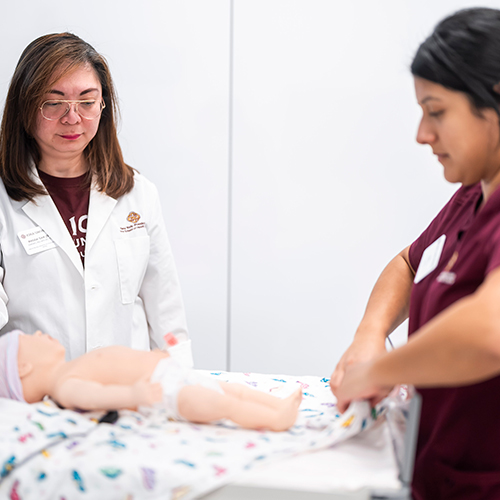
Along with your academic strengths, it’s important to demonstrate critical soft skills to position yourself as a strong applicant—someone committed to their education and to becoming a nurse.
- Mature, professional, accountable: Watson specifies that applicants must be mature and accountable. As a nurse, you may be working in high-stakes situations and on diverse teams of other health care professionals, all with one goal: to deliver the best care possible for patients. As you progress through your training, you’ll learn to embody these traits, building the professional judgment and responsibility required in real-world health care environments.
- Emotional intelligence and empathy: To excel in nursing—both in training and in practice—you must be self-aware, empathetic and emotionally resilient. “You’re caring for people at their most vulnerable—it’s demanding both emotionally and physically,” Watson explains. Many ABSN programs, like Iona’s, build these skills through reflection and guided practice to prepare you for the realities of patient care.
- Driven and disciplined: Admissions committees seek out candidates who know how to stay motivated—even when they face challenges. Be sure to highlight how you put in consistent effort, effectively manage your time and have the discipline to balance course work, clinicals and personal responsibilities.
How to Choose an Accelerated Nursing Program
Before diving into the degree search, you must understand that an ABSN degree is not an exploratory learning experience that helps you decide if you want to become a nurse. Its expedited pace, intensive course work and demanding clinical placements require a high level of discipline and dedication. An ABSN is for those who are deeply invested in pursuing a nursing career.
During your time in the nursing program, you’ll be fully immersed in your studies. As DePuy explains about Iona’s ABSN program, “It will be a lifestyle adjustment for those 16 months.” But the hard work and sacrifices you make along the way are worthwhile, and the classmates beside you will soon feel like family.
Location and Logistics
Because accelerated nursing programs are often delivered in an on-campus format, location and logistics impact which programs you may consider. One of the first questions you’ll probably ask is—which ABSN programs are close to me? Since you’ll likely be commuting to campus regularly, it’s important to evaluate:
- Your proximity to campus and clinical placement sites, including commute time, transportation needs and the associated costs.
- The program’s format and in-person expectations, such as how often you’re required to be on campus.
- Your availability outside class time, which may be spent studying, completing assignments and preparing for exams.
- How your studies will impact your work schedule, especially if you have a full-time career or family dependents.
All of these factors determine how you balance academics and personal responsibilities. It’s essential to be realistic about which program works for you in order to set yourself up for long-term success.
Program Features, Outcomes and Connections
After narrowing down your pool of potential accelerated nursing programs, take time to evaluate the quality of each program and how these features contribute to your overall academic experience, professional development and transition into the health care workforce.
When exploring which nursing programs will lead to strong outcomes, pay attention to:
- Class size to help determine the level of one-on-one attention and support you’ll receive.
- Commission on Collegiate Nursing Education (CCNE) Accreditation to ensure you’re receiving top-quality, cutting-edge nursing education.
- Hospital affiliations and the quality of clinical placement opportunities.
- NCLEX pass rates, signaling their academic preparation and curriculum effectiveness.
- Alumni employers, which may point to existing hiring pipelines and a strong employer reputation.
- Faculty and instructors, including their professional background and areas of expertise.
At Iona, we build these elements into the ABSN program to deliver nursing education that is skill-focused and grounded in real-world practice. Our small class sizes, dedicated faculty and in-depth curriculum ensure you build well-rounded expertise.
Through a partnership with NewYork-Presbyterian, you gain hands-on clinical experience in fast-paced health care settings—connecting classroom learning to professional expectations and future career opportunities. And with a 92 percent first-time NCLEX pass rate, our program supports a clear pathway toward registered nursing practice.
Cost, Financial Aid and Return on Investment
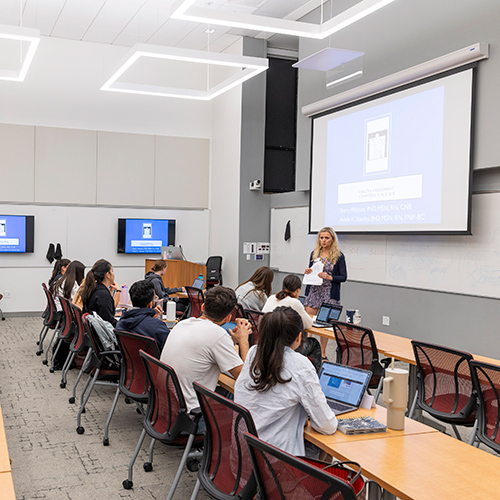
An accelerated nursing degree is an upfront investment, but one that empowers you to begin working sooner and earning more. When comparing ABSN programs, it’s important to explore:
- Tuition competitiveness and how program costs compare across institutions.
- Scholarships and financial aid that can help you manage the cost of your education.
- The time-to-practice, which means how quickly you can complete your degree and begin working as a registered nurse.
At Iona University, the accelerated format allows you to complete your nursing education efficiently and transition into professional practice sooner. Within six months of graduation, 100 percent of Iona nursing graduates secure employment and begin building their careers at health care facilities in New York and across the country.
The Bureau of Labor Statistics reports that the median annual salary for registered nurses is $93,600; however, DePuy notes, many Iona nursing graduates report earning salaries around $106,000 shortly after graduation, reflecting both strong demand for nurses and the value of entering the workforce through an accelerated pathway.
Pre-Application Checklist
Before you even begin the application process for your chosen accelerated nursing program, be sure to complete these steps to ensure you are properly prepared:
- Carefully review all admissions criteria and the application process: Make sure you understand your eligibility and the steps you need to take in order to apply. Crafting a comprehensive application takes some time, so plan accordingly.
- Attend an ABSN information session: Whether it's an online or in-person event, an info session is a great first step to get connected and learn about the admissions process, curricula, clinicals, financial aid and more.
- Meet with an admissions counselor: Schedule an appointment with an admissions counselor to review your transcripts, identify any gaps in your course work and create a plan for completing your prerequisites. Additionally, come prepared with questions so you can receive personalized guidance on program expectations, financial responsibilities, scholarship opportunities and the application process.
Want to connect with Iona’s admissions staff? Reach out to Victoria Porter, our nursing admissions counselor, to schedule your meeting. - Visit campus: Since many ABSN programs are primarily on campus, it’s essential to see where you’ll be learning. Take time to explore the facilities, simulation labs and classrooms to get a feel for the environment. And, if this is a group tour, you can get a head start on making connections on campus. Start planning your Iona visit today!
Is an ABSN Worth It?
Yes, an accelerated BS in Nursing is a worthwhile investment, especially if you’re seeking a faster, focused pathway into a stable and meaningful nursing career.

“As a nurse, you make a real-life difference in an individual's and a family’s life. You can make a difference just by showing up and giving that extra care. Not many other jobs can say that.”
- Sherylyn Watson, Ph.D., RN
NewYork-Presbyterian Iona School of Nursing & Health Sciences
Start Your ABSN Journey at Iona University
Ready to take the next step toward your future in nursing? Iona’s Accelerated Bachelor of Science in Nursing program delivers a rigorous curriculum, hands-on training and a supportive learning environment to prepare you for an impactful career.
Connect with our nursing admissions counselor to learn more.