The Human Ingredient: Legendary Restaurateur on Hospitality, AI and Why Human Connection Matters Most
Iona University’s “Education in Real Life” explores the intersection of AI, education and industry through a distinctly human lens with John Crabtree
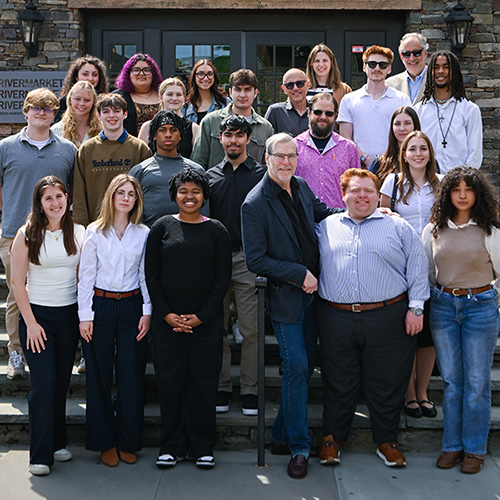
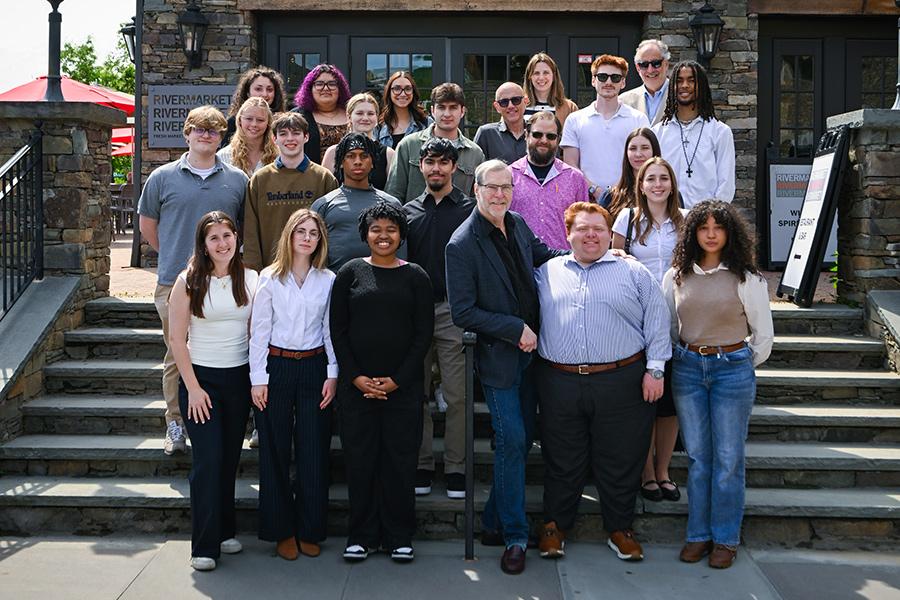
Students gathered at Crabtree’s RiverMarket Bar & Kitchen in Tarrytown to learn more about how AI is being applied in the hospitality industry.
For fifty years, John Crabtree has watched people gather around a good meal.
As the proprietor of renowned restaurants in Westchester County, N.Y., he has served celebrities, politicians, friends, neighbors and everyone in between. And after half a century in the business, he still believes hospitality comes down to one essential ingredient: human connection.
“It’s never just about the food,” he says. “Hospitality is about understanding people and creating an experience where they feel seen and cared for.”
On a sunny spring afternoon along the Hudson River—with plates of margarita pizza, grass-fed burgers and tiramisu filling the tables at his RiverMarket Bar & Kitchen in Tarrytown—Crabtree stepped away from the kitchen and into a slightly different role: that of teacher. His pupils? Twenty students from Iona University’s new Education in Real Life program, which explores the intersection of AI, education and industry through a distinctly human lens. Between bites, students exchanged thoughtful questions, and Crabtree—ever the gracious host—answered with a sense of enduring passion for his craft.
“You have to want to take care of people to thrive in this industry,” said Crabtree, who formerly owned and operated Crabtree’s Kittle House in Chappaqua for over 40 years. “AI is not going to change the human connection necessary for great hospitality—these are the same qualities that have mattered for the last 2,000 years. But AI is coming whether we like it or not. So, the question becomes: how do we use it well?”
A Life’s Purpose
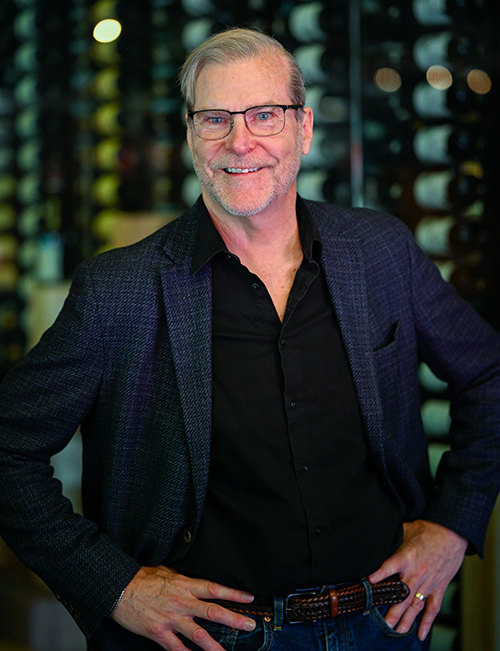
John Crabtree
As a child, Crabtree was captivated by restaurants—not only by the food, but by the experience itself. Family dinners left lasting impressions: attentive servers, welcoming hosts, managers who made guests feel seen.
Later, while traveling through Europe during his college years, food became inseparable from culture. He recalled hitchhiking across the continent, eating baguettes in Paris cafés, sharing paella with families in Spain, and discovering how meals could tell stories about entire communities.
Ironically, despite growing up around restaurants, he initially wanted no part of the business.
“My father owned a restaurant, and I worked every terrible job there,” he laughs. “Dishwasher, busboy, porter—I swore I’d never do this for a living.”
Then, just after graduating college, the family restaurant burned down. What could have been an ending instead became the beginning of his career.
As Crabtree stayed to help rebuild the business, he found himself drawn not only to food, but to the complexity and rhythm of hospitality itself—operations, customer experience, management, and the constant interaction with people.
“Once the hospitality bug bites you, it’s hard to leave,” he said. “I was never really a 9-to-5 person.”
Navigating Transformation
Now, decades later, Crabtree is navigating yet another transformation—one larger than the shift from pencils to computers or phone calls to digital reservations. Artificial intelligence has arrived in hospitality, and like every other industry, restaurants are adapting.
“I’ve seen a lot of technological changes over the years. We started out with calculators and pencils. Then eventually we got PCs and fax machines—and those were innovations at the time,” he recalled. “Nothing has been as challenging as AI is today, but we use technology as a tool to make us better.”
Restaurants today increasingly rely on reservation platforms, customer databases, inventory tracking, social media automation and AI-assisted marketing, he said. While some fear the technology could replace jobs or diminish human interaction, Crabtree sees it differently. He believes AI’s greatest value lies in helping hospitality professionals better understand people—and giving them more time to do so.
That kind of holistic philosophy is what drew Crabtree to Iona’s Education in Real Life.
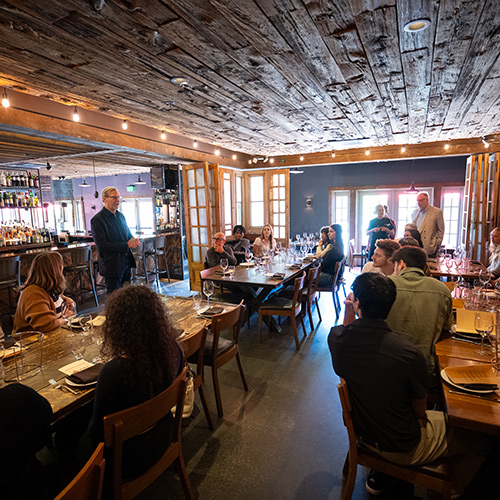
Crabtree emphasized how human connection is necessary for great hospitality.
“When I first heard about this program, I thought it was a brilliant idea. President Carey is a visionary for bringing this up,” he said. “All you hear about right now is the ‘Chicken Little’ effect—the sky is falling, AI is coming, everybody’s afraid of it. But this program approaches AI differently. It says: embrace it, use it as a tool, don’t be afraid of it.”
During his visit with students, Crabtree said he was energized by their curiosity. He saw young people eager not only to understand AI, but to understand themselves—where they fit into a rapidly changing world and what skills will still matter moving forward. His advice to them was ultimately simple: remain adaptable, stay open to change, and never lose sight of your humanity.
“I’ve also watched entire life cycles unfold through my customers. I’ve seen people get married, then bring their babies for christenings—and then 30 years later, those babies get married here, too,” he said. “This industry is always about the people.”
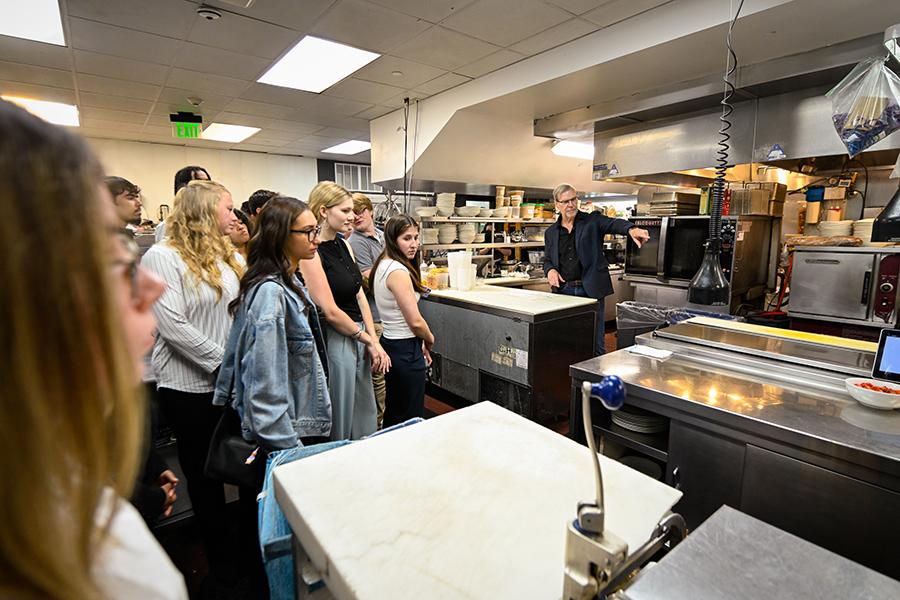
“When I first heard about [Education in Real Life], I thought it was a brilliant idea [This] program approaches AI differently. It says: embrace it, use it as a tool, don’t be afraid of it.”
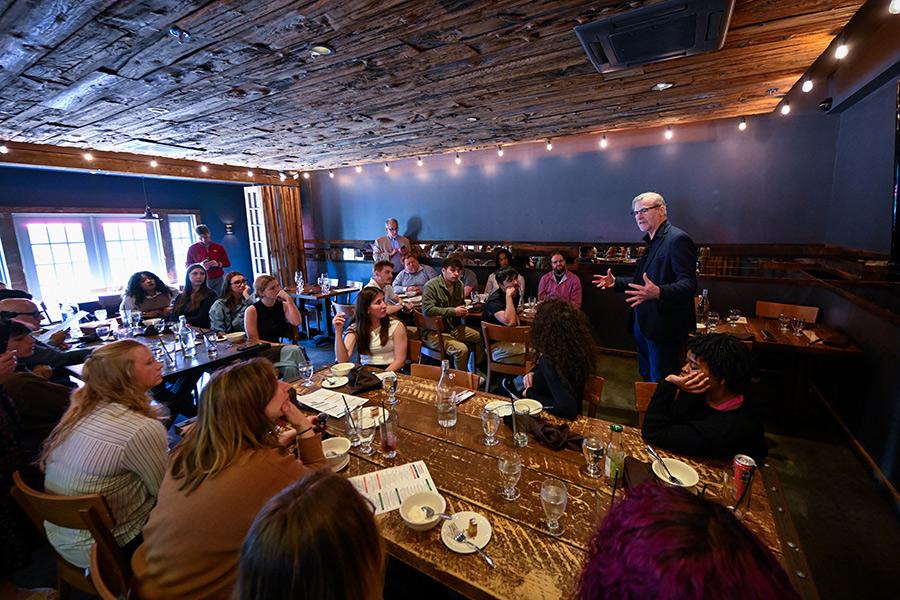
Throughout the visit, Crabtree discussed how AI is the biggest technological change the industry has gone through.
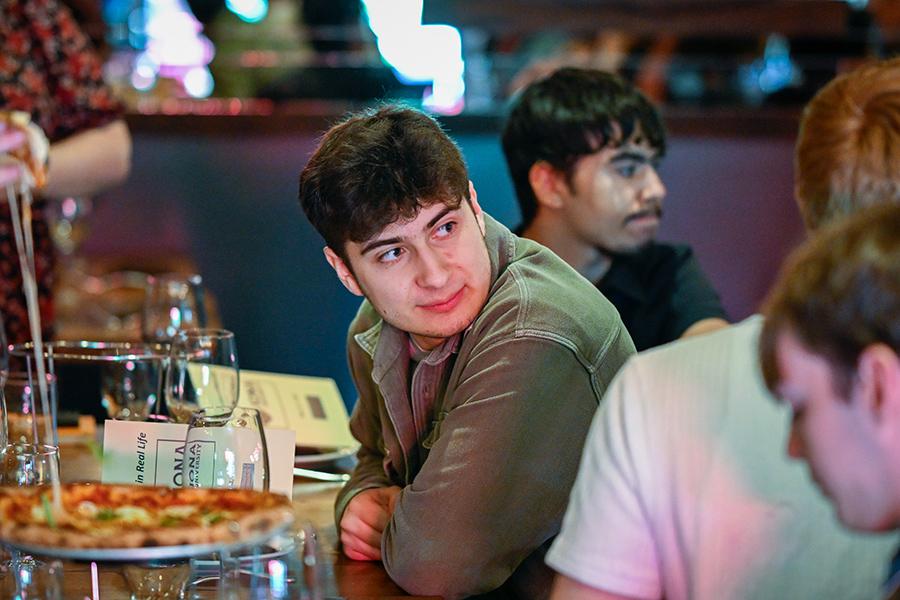
Students enjoyed margarita pizza, grass-fed burgers and tiramisu while learning about the intersection of AI, education and the hospitality industry.
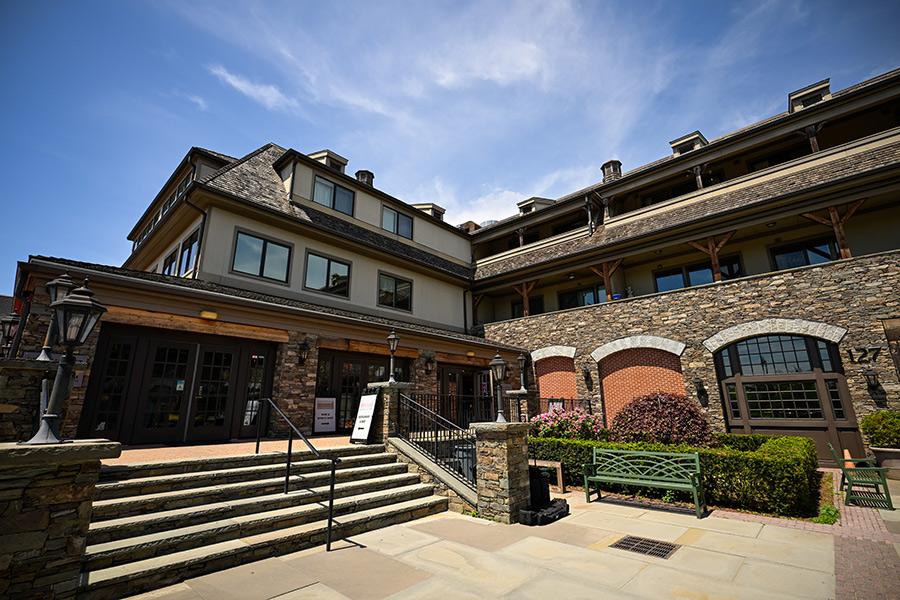
Crabtree has been in the hospitality industry for over 40 years. His latest venture is RiverMarket Bar & Kitchen in Tarrytown.
ABOUT IONA
Founded in 1940, Iona University is a master's-granting private, Catholic, coeducational institution of learning in the tradition of the Edmund Rice Christian Brothers. Iona's 45-acre New Rochelle campus and 28-acre Bronxville campus are just 20 miles north of Midtown Manhattan. With a total enrollment of over 4,000 students and an alumni base of 55,000 around the world, Iona is a diverse community of learners and scholars dedicated to academic excellence and the values of justice, peace and service. Iona is highly accredited, offering undergraduate degrees in liberal arts, science and business administration, as well as Master of Arts, Master of Science and Master of Business Administration degrees and numerous advanced certificate programs. Iona students enjoy small class sizes, engaged professors and a wide array of academic programs across the School of Arts & Science; LaPenta School of Business; NewYork-Presbyterian Iona School of Nursing & Health Sciences; and Hynes Institute for Entrepreneurship & Innovation. Iona also continues to be recognized in prestigious national rankings. Most recently for 2026, Iona has been named one of the nation’s best colleges by The Princeton Review, The Wall Street Journal, Forbes and others. Additionally, U.S. News & World Report recognized Iona as one of top for social mobility in the country, while Georgetown University's Center on Education and the Workforce (CEW) ranked an Iona degree in the top 6 percent nationally for long-term return on investment. Iona’s LaPenta School of Business, meanwhile, is also accredited by AACSB International, a recognition awarded to just 6 percent of business schools worldwide. In addition, The Princeton Review once again named Iona to its “Best Business Schools for 2025,” recognizing both its on-campus and online MBA programs. Connecting to its Irish heritage, Iona also opened a new campus in County Mayo, Ireland, located on the historic 400-acre Westport House Estate. A school on the rise, Iona officially changed its status from College to University on July 1, 2022, reflecting the growth of its academic programs and the prestige of an Iona education.